

In early January 2024, a subcontractor served a creditor’s statutory demand on Forte Sydney Property Group, seeking the release of retention monies withheld to secure the subcontractor’s obligations, including the rectification of defects in their works.
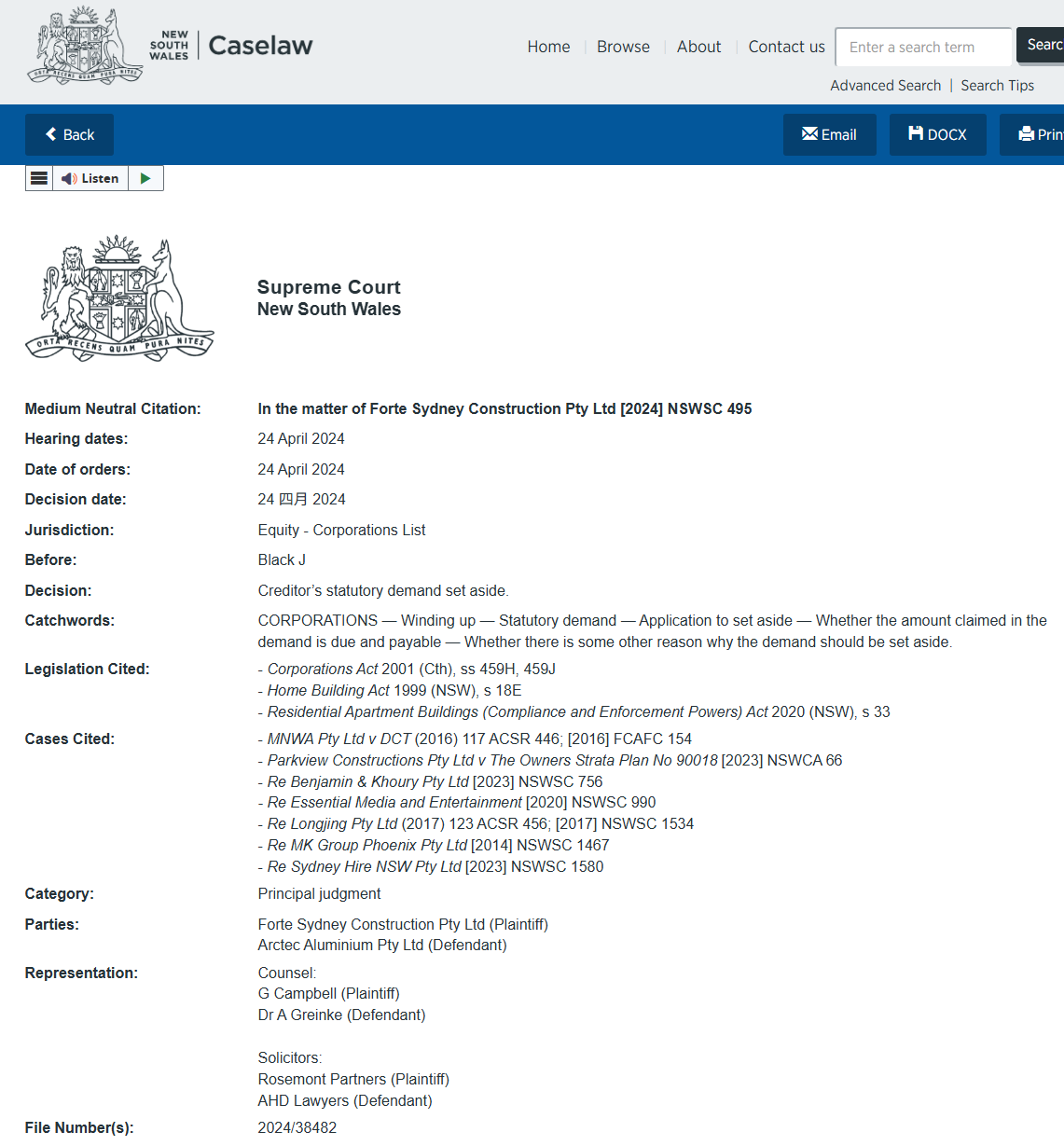
Forte engaged commercial litigation lawyer Jason Koh to act in this matter. The subcontract provided that the remaining retention would be released when there had been “proper rectification as determined by [the builder] of all defects as notified to [the subcontractor].”
The subcontractor argued that, following Forte’s previous unsuccessful claim against them for certain defects (“Builder’s Previous Claim”), all issues regarding defects had been finally determined, and therefore the retention should be released.
Forte’s position was:
-
The Previous Claim did not determine all defect issues to finality. Subsequent defects were discovered by third parties, including individual owners, the owners corporation, Fair Trading NSW, the developer, and the Building Commission, and Forte remained entitled to pursue these.
-
Release of retention depends on Forte’s acknowledgment that proper rectification of all defects has occurred, irrespective of the Previous Claim’s outcome.
Forte provided evidence of notices issued to the subcontractor regarding outstanding defects, demonstrating that not all defects had been addressed, and that whether Forte could sue for unresolved defects was a separate matter. The Supreme Court agreed with Forte, setting aside the statutory demand and ordering the subcontractor to pay Forte’s legal costs. The judgment is available here: Court Judgment.
Key Takeaways:
-
Careful consideration of contract wording is critical; subtle differences can significantly affect rights in a dispute.
-
Administering the contract diligently, including issuing timely defect notices, is essential to preserving rights.